|
I am a PhD student in Computer Science at York University, supervised by Dr. Kosta Derpanis in the CVIL Lab. My research focuses on interpreting world models. Previously, I completed my M.Sc. with Dr. Marcus Brubaker, where I worked on generative novel view synthesis and scale ambiguity. I also interned at the Vector Institute and VITA Lab in EPFL. Before my graduate studies, I completed my B.Sc. in Computer Engineering at Sharif University of Technology. My research interests lie at the intersection of interpretability, video generative models, and 3D computer vision. I am particularly interested in understanding how world models represent and process spatiotemporal information. |

|

|

|

|
|
|
|
|
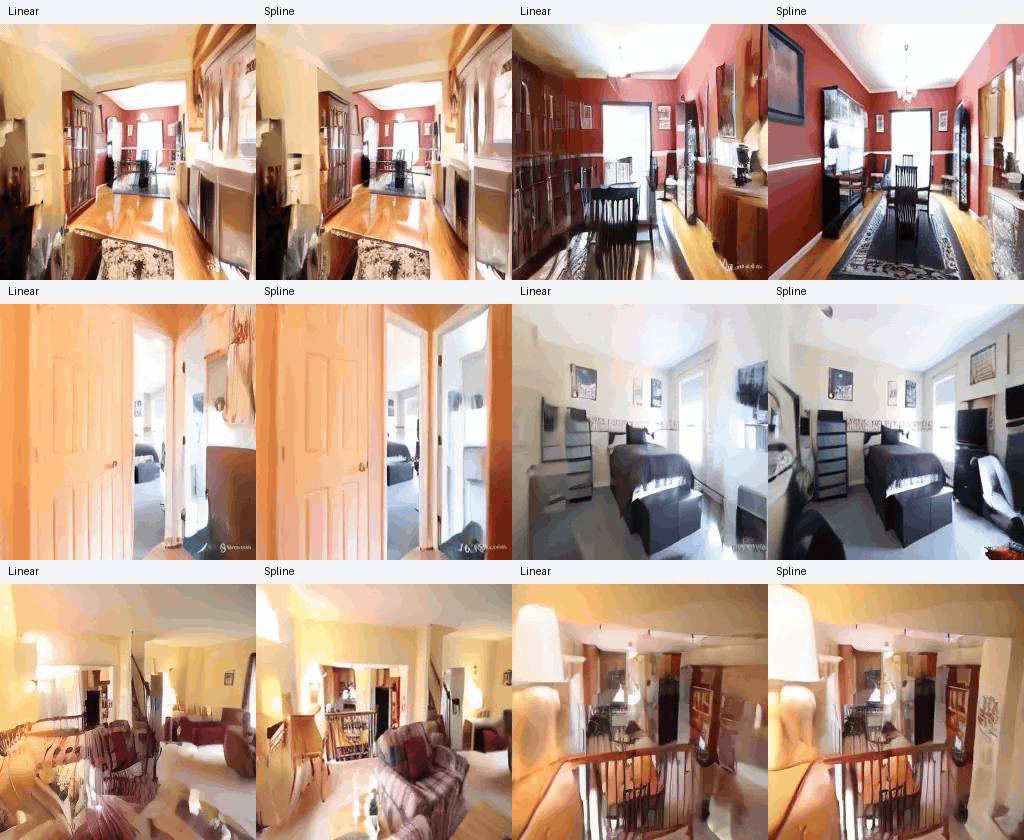
Sharon S. Musa, Fereshteh Forghani, Harrish Thasarathan, Sonia Joseph, Matthew Kowal, Konstantinos Derpanis ICML 2026 Mechanistic Interpretability workshop project page / arXiv We probe spatiotemporal representations in video foundation models, investigating what, where, and how visual information is encoded across different architectures and training objectives. |
|
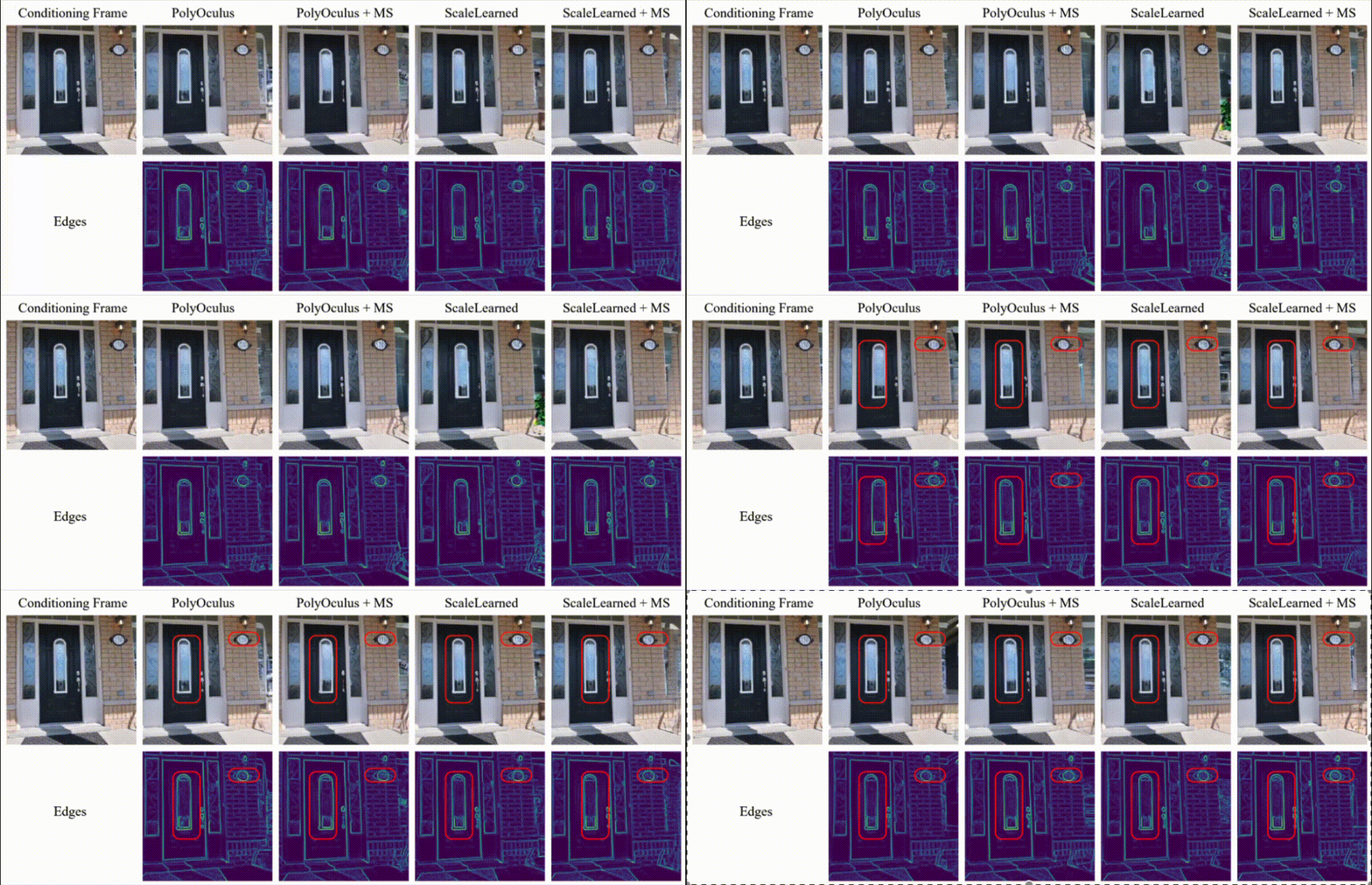
Fereshteh Forghani, Jason J. Yu, Tristan Aumentado-Armstrong, Konstantinos G. Derpanis, Marcus A. Brubaker, ArXiv 2025 (in submission) project page / arXiv
We propose a framework to estimate scene scales jointly with the GNVS model in an end-to-end fashion. We also define two new metrics, Sample Flow Variability (SFV) and Scale-Sensitive Thresholded Symmetric Epipolar Distance (SS-TSED),that directly measure the variability of scale learned by a GNVS method. |
|
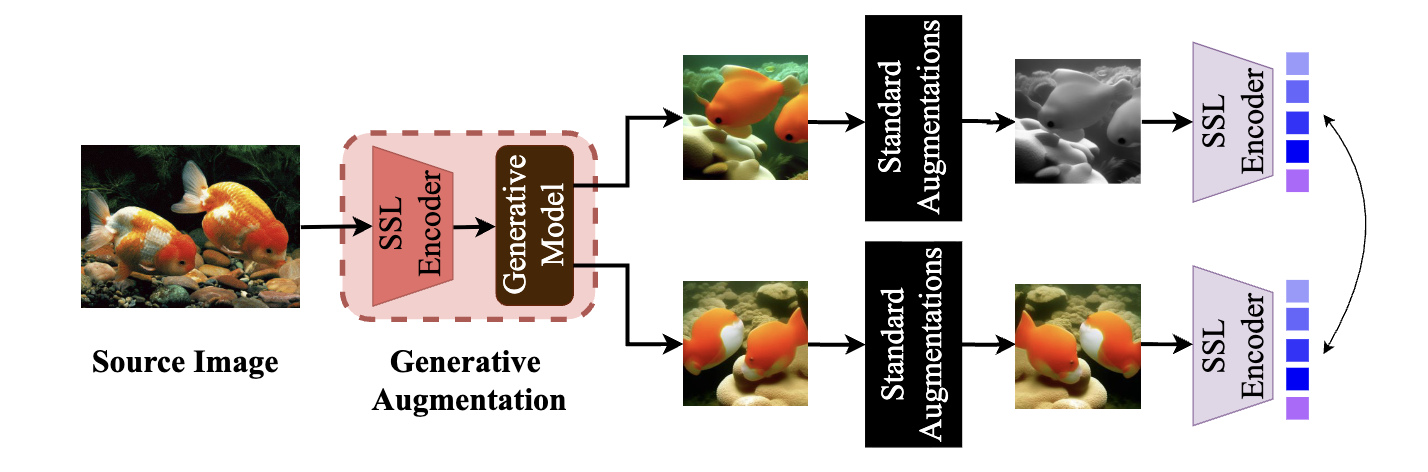
Sana Ayromlou, Vahid Reza Khazaie, Fereshteh Forghani, Arash Afkanpour, AAAI 2025 arXiv
we introduce a framework that enriches the self-supervised learning (SSL) paradigm by utilizing generative models to produce semantically consistent image augmentations. By directly conditioning generative models on a source image, our method enables the generation of diverse augmentations while maintaining the semantics of the source image, thus offering a richer set of data for SSL. |
|
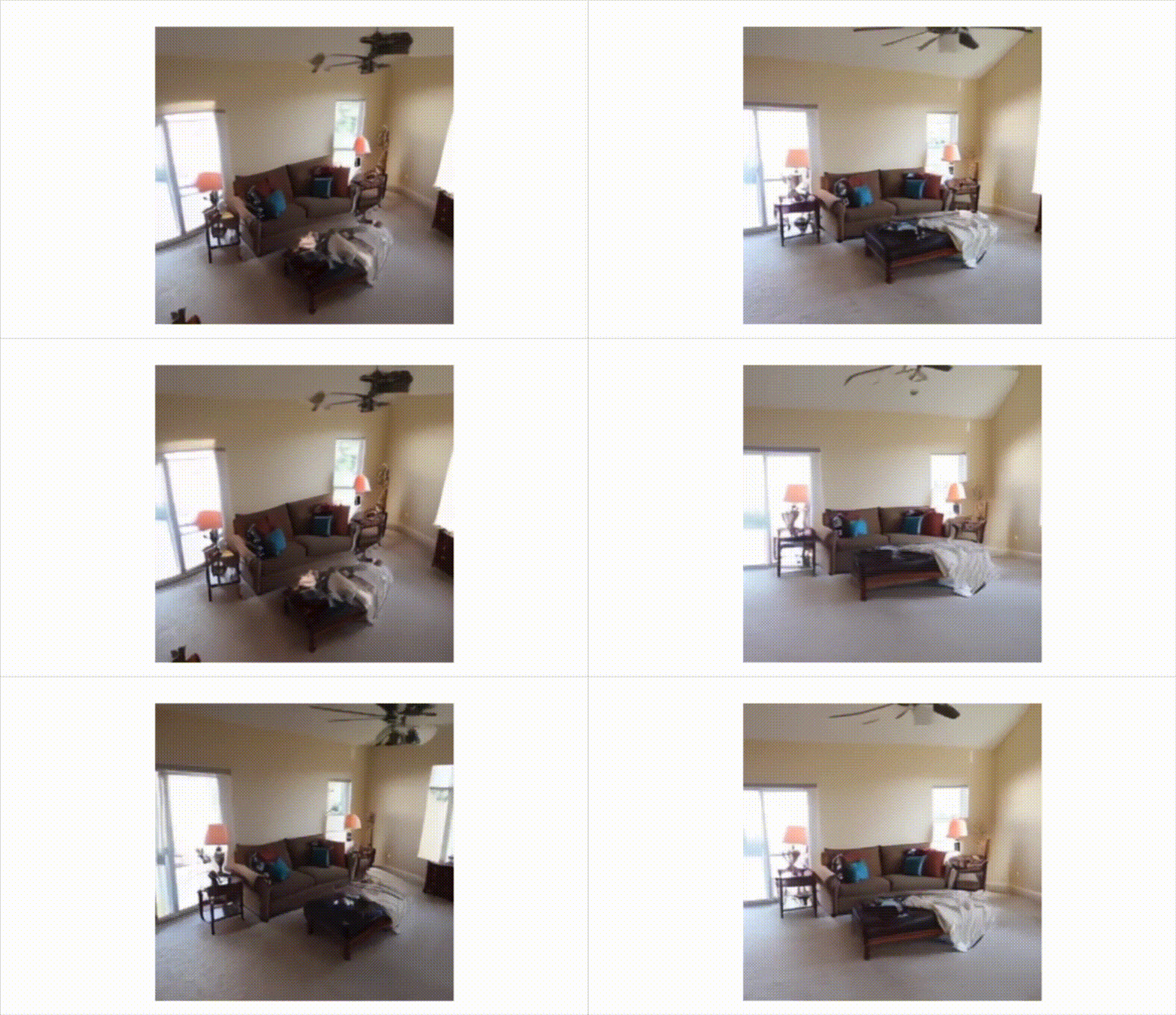
Jason J. Yu, Tristan Aumentado-Armstrong, Fereshteh Forghani, Konstantinos G. Derpanis, Marcus A. Brubaker, ECCV 2024 project page / arXiv / code
we propose a set-based generative model that can simultaneously generate multiple, self-consistent new views, conditioned on any number of views. Our approach is not limited to generating a single image at a time and can condition on a variable number of views. As a result, when generating a large number of views, our method is not restricted to a low-order autoregressive generation approach and is better able to maintain generated image quality over large sets of images. |
|
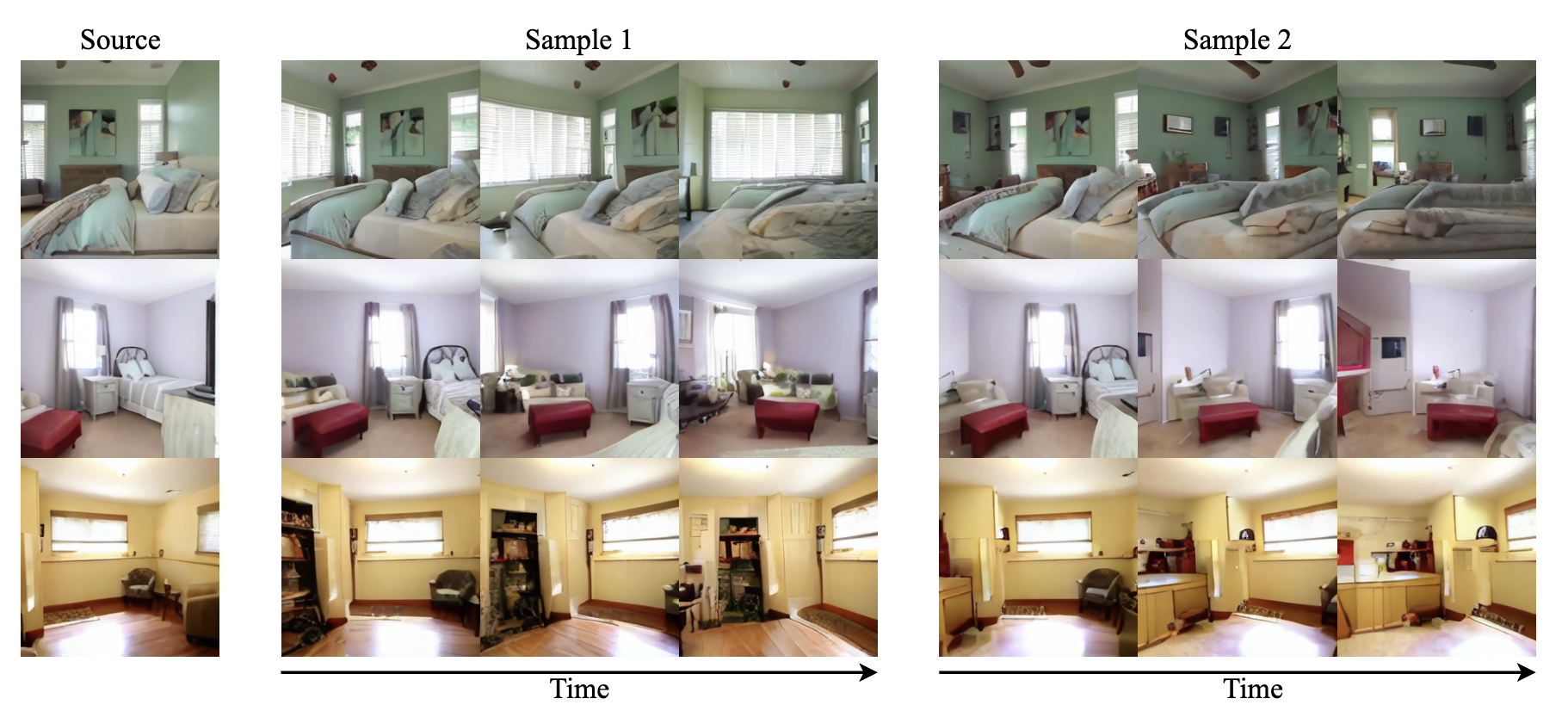
Jason J. Yu, Fereshteh Forghani, Konstantinos G. Derpanis, Marcus A. Brubaker, ICCV 2023 project page / arXiv / code
we propose a novel generative model capable of producing a sequence of photorealistic images consistent with a specified camera trajectory, and a single starting image. To measure the consistency over a sequence of generated views, we introduce a new metric, the thresholded symmetric epipolar distance (TSED), to measure the number of consistent frame pairs in a sequence. |
|
Design and source code from Jon Barron's website. |